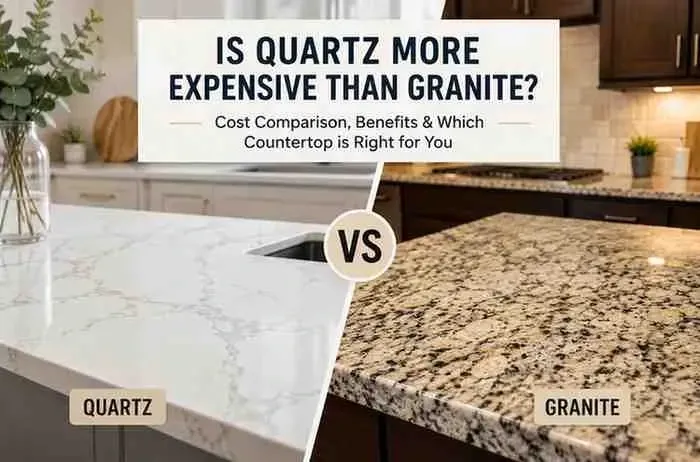
Is Quartz More Expensive Than Granite
Is Quartz More Expensive Than Granite? What Homeowners Should Know Before Choosing Countertops
If you're planning a kitchen remodel, there's a good chance you've narrowed your countertop options down to two of the most popular choices: quartz and granite.
At first glance, they seem very similar. Both offer a premium appearance, both are known for durability, and both can completely transform the look of a kitchen.
But when homeowners start comparing estimates, one question almost always comes up:
Is quartz more expensive than granite?
The short answer is that it depends.
In some cases, quartz can cost more than granite. In other situations, certain granite slabs may actually be more expensive than quartz. The final price depends on factors such as material quality, design selection, availability, and installation requirements.
However, cost is only part of the decision. Understanding the differences between quartz and granite can help you determine which option offers the best value for your home.
Why This Comparison Matters
Countertops are often one of the biggest investments in a kitchen renovation.
Most homeowners aren't just looking for the cheapest option. They're trying to find a surface that looks beautiful, performs well, and continues to add value for years to come.
Because quartz and granite occupy a similar position in the market, many homeowners compare them side by side before making a final decision.
While pricing matters, lifestyle often becomes the deciding factor.
Understanding Quartz Countertops
Quartz countertops are engineered surfaces made from natural quartz combined with resins and pigments.
One reason quartz has become so popular is its consistency. Homeowners know exactly what they're getting because the colors and patterns are carefully designed during manufacturing.
Quartz is also known for its modern appearance.
Whether someone wants a bright white kitchen, a marble-inspired design, or a sleek contemporary look, quartz offers countless options.
Many homeowners appreciate that quartz provides a clean and polished appearance without requiring extensive maintenance.
Understanding Granite Countertops
Granite is a completely natural stone that is cut directly from the earth.
Every slab is unique, which is one of the biggest reasons homeowners choose it.
No two pieces of granite are exactly alike. The natural movement, color variations, and patterns create a one-of-a-kind appearance that many people find appealing.
For homeowners who love natural materials and unique designs, granite often has a special character that engineered materials cannot fully replicate.
This natural beauty continues to make granite a popular choice despite growing competition from quartz.
So, Is Quartz More Expensive Than Granite?
The answer depends on the specific materials being compared.
Entry-level granite may sometimes cost less than premium quartz options.
At the same time, rare or exotic granite slabs can easily cost more than many quartz products.
This is why homeowners often receive different answers when researching prices online.
In reality, both materials fall into a similar pricing category.
Rather than asking which one is always cheaper, it may be more helpful to ask which material provides the best value for your needs.
The difference in cost is often smaller than people expect.
Why Many Homeowners Choose Quartz Even When It Costs More
If quartz happens to cost slightly more than a granite option, many homeowners still choose it.
One reason is convenience.
Modern families often prefer materials that fit into busy lifestyles. Quartz is known for being easy to maintain, which makes it attractive to homeowners who want a beautiful kitchen without additional upkeep.
After spending time and money on a remodel, many people appreciate having countertops that continue looking great with minimal effort.
For busy households, that convenience can feel just as valuable as the countertop itself.
Why Some Homeowners Still Prefer Granite
Despite the popularity of quartz, granite remains a favorite for many homeowners.
The appeal often comes down to authenticity.
Granite is a natural stone with patterns and characteristics created by nature over millions of years.
Some homeowners simply love knowing that their countertop is completely unique.
They enjoy the natural movement and variation that makes granite different from every other slab.
For people who appreciate organic materials and timeless design, granite often feels more special.
Which Material Adds More Value?
Both quartz and granite are considered premium countertop materials.
From a home value perspective, either option can help create an attractive and updated kitchen.
Buyers typically view both materials positively because they are associated with quality and durability.
The biggest difference often comes down to buyer preference rather than resale value.
Some buyers are drawn to the modern appearance of quartz, while others appreciate the natural beauty of granite.
In most cases, choosing a quality countertop installation matters more than choosing one material over the other.
How to Decide Between Quartz and Granite
Instead of focusing only on price, homeowners should think about how they use their kitchen every day.
If you prefer a modern appearance, consistent patterns, and easy maintenance, quartz may be the better fit.
If you love natural stone, unique patterns, and organic beauty, granite might be the right choice.
Both materials offer excellent durability and visual appeal.
The best countertop isn't necessarily the one that costs less—it's the one that matches your lifestyle and design goals.
Final Thoughts
So, is quartz more expensive than granite?
Sometimes yes, sometimes no.
The actual cost depends on the specific products being compared, installation requirements, and overall project scope.
For most homeowners, the better question is not which material costs less, but which one delivers the best long-term value.
Quartz offers consistency, convenience, and modern style. Granite offers natural beauty, uniqueness, and timeless appeal.
Both can create stunning kitchens that homeowners enjoy for many years.
At the end of the day, the right choice comes down to your personal preferences, budget, and how you want your kitchen to look and function long after the remodel is complete.
